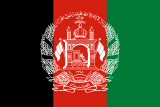

Afghanistan
Last Updated: 2026-04-01
Official Portal: Ministry of Justice (Taliban administration) — Note: institutional continuity uncertain since August 2021
Embassy Finder: Afghan Diplomatic Missions
Quick Facts
| Category | Details |
|---|---|
| Residency for naturalization | 5 years of continuous residence |
| Language requirement | Knowledge of one of the official languages (Dari or Pashto) |
| Civics test | None formalized |
| Processing time | Highly variable; administrative capacity severely limited since 2021 |
| Naturalization fee | Nominal (historically minimal) |
| Dual citizenship | Conditionally permitted under the 2004 Constitution (Article 4); Taliban administration position unclear |
| Citizenship by birth in Afghanistan | Yes — any person born in Afghanistan is considered Afghan unless proven otherwise |
| Citizenship by descent | Automatic if father is Afghan; maternal descent recognized under the 2004 Constitution |
| Governing law | Law on Citizenship of Afghanistan (2000), as supplemented by the 2004 Constitution (Articles 4 and 28) |
Dual Citizenship
The 2004 Constitution of Afghanistan (Article 4) states that no Afghan citizen shall be deprived of citizenship. Article 28 further provides that Afghan citizenship cannot be renounced, and acquisition of a foreign nationality does not automatically terminate Afghan citizenship.
In practice, Afghanistan has tolerated dual citizenship for decades, particularly among the large diaspora communities in Pakistan, Iran, the United States, Germany, and Australia. The Taliban administration, which took control in August 2021, has not formally legislated on this point, and the legal framework remains in a state of uncertainty.
Key considerations:
- Afghan nationals who naturalized abroad generally retain Afghan citizenship by default, as Afghan law does not recognize voluntary renunciation.
- Foreign governments may not recognize Afghanistan’s claim to continued citizenship over their own naturalized citizens.
- Travel to Afghanistan on a foreign passport alone carries risks; Afghan authorities may insist on treating dual nationals as Afghan citizens.
- The Taliban government has made verbal statements discouraging dual citizenship but has not codified any changes.
- For immigration and asylum purposes in Western countries, Afghan citizenship is often presumed to continue regardless of the holder’s intent.
Acquisition of Nationality
By Birth (Jus Soli)
Afghanistan applies a broad jus soli principle. Under the 2000 Citizenship Law (Article 9), any person born within the territory of Afghanistan is considered an Afghan national, unless it is proven that the person acquired a foreign nationality at birth through parentage.
This is one of the more expansive birthright citizenship provisions in the region, though enforcement and documentation remain deeply inconsistent. The decades of conflict have destroyed civil registration infrastructure in many provinces, making proof of birth on Afghan territory difficult.
By Descent (Jus Sanguinis)
Afghan citizenship transmits automatically by descent:
- Through the father: A child born to an Afghan father, regardless of place of birth, is an Afghan citizen. This is the primary and historically dominant pathway.
- Through the mother: The 2004 Constitution (Article 4) established that children of Afghan mothers are also citizens. Prior to 2004, maternal descent was not consistently recognized. Implementation remains uneven, particularly under the Taliban administration, which has rolled back women’s rights in many domains.
- There is no generational limit on descent-based citizenship, though proving lineage becomes increasingly difficult without documentation.
By Adoption
Afghan law, based on Islamic jurisprudence, does not recognize formal adoption (tabanni) in the Western legal sense. Guardianship (kafalah) does not confer citizenship. A child placed under kafalah retains the nationality of their biological parents.
International adoptions from Afghanistan are extremely rare and not facilitated by Afghan authorities. Foreign courts that finalize adoptions of Afghan children do not thereby change the child’s Afghan nationality status.
Note: Under the Taliban administration, guardianship proceedings are handled exclusively through Sharia courts, and the procedures for foreign nationals have become significantly more restrictive.
By Marriage
A foreign woman who marries an Afghan man acquires Afghan citizenship automatically, unless she expressly declines it. A foreign man who marries an Afghan woman does not automatically acquire citizenship but may apply for naturalization with reduced requirements.
This gender asymmetry persists in the statutory framework despite the equality provisions of the 2004 Constitution. Under the Taliban administration, these gender-based distinctions have been reinforced rather than challenged.
By Naturalization
| Requirement | Details |
|---|---|
| Residence | 5 years continuous lawful residence in Afghanistan |
| Language | Proficiency in Dari or Pashto |
| Character | No conviction for serious crimes |
| Financial | Ability to support oneself |
| Renunciation | Must renounce prior nationality (in principle) |
| Age | Must be at least 18 years old |
| Fee | Nominal |
Note: Naturalization applications have been effectively frozen since the Taliban takeover in August 2021. Administrative capacity for processing new applications is extremely limited. Even before 2021, naturalization was rare, as Afghanistan has historically been a country of emigration rather than immigration.
Loss and Renunciation
Afghan nationality law is notably restrictive on loss of citizenship:
- Voluntary renunciation: The 2004 Constitution (Article 28) explicitly states that no Afghan national may be deprived of citizenship. The government’s position has historically been that Afghan citizenship cannot be voluntarily renounced. This creates complications for Afghans naturalizing in countries that require renunciation of prior nationalities.
- Involuntary loss: Under the 2000 law, citizenship could theoretically be revoked for treason, espionage, or joining a foreign military without government permission. In practice, mass denaturalization has not been systematically applied.
- Taliban-era uncertainty: The Taliban administration has not issued formal guidance on citizenship revocation, though reports of targeting individuals on political grounds exist.
- Practical impact: Many Western countries accept a sworn declaration from Afghan applicants that they are “unable to renounce” their Afghan citizenship, given the absence of a functioning renunciation mechanism. This is particularly relevant in Germany, Canada, and Australia.
Restoration of Nationality
Persons who are deemed to have lost Afghan citizenship (through denaturalization orders or extended absence without documentation) may apply for restoration. The 2000 law provides for reinstatement upon application and proof of prior Afghan nationality.
Requirements for restoration:
- Application to the relevant Afghan authority (consular mission abroad or Ministry of Interior)
- Evidence of prior Afghan citizenship (tazkira, passport, birth certificate, or witness attestation)
- No disqualifying criminal record
- Processing is handled on a case-by-case basis
Given the displacement of millions of Afghans across multiple decades of conflict (Soviet era, civil war, Taliban periods, post-2001, and post-2021), restoration claims are common but difficult to process due to destroyed or inaccessible records. Afghan embassies abroad (many of which still operate under the previous government’s mandate rather than Taliban authority) handle most restoration requests from the diaspora.
Diplomatic representation note: As of 2026, the status of Afghan embassies is fragmented. Some missions recognize the Taliban government, others continue to operate under the authority of the previous Islamic Republic. The embassy handling a restoration claim may significantly affect the outcome and processing time.
Stateless Persons and Foundlings
Afghanistan is not a party to the 1954 Convention Relating to the Status of Stateless Persons or the 1961 Convention on the Reduction of Statelessness.
However, the broad jus soli principle in Article 9 of the 2000 law provides some protection: a child found on Afghan territory whose parents are unknown is presumed Afghan. This foundling provision prevents statelessness at birth in theory, though documentation failures create de facto statelessness for many.
Populations at risk:
- Nomadic Kuchi communities, who historically lack birth registration and civil documentation
- Children born in refugee camps outside Afghanistan (Pakistan, Iran) to undocumented parents
- Women and children who have lost family documentation during displacement
- UNHCR has identified Afghanistan as one of the countries with the highest populations at risk of statelessness
- An estimated 500,000+ persons in or from Afghanistan are at risk of statelessness according to international monitoring agencies
Document Checklist
Tazkira (national identity document) — the primary proof of Afghan citizenship
Birth certificate (if available; many Afghans lack formal birth registration)
Father’s tazkira or proof of paternal Afghan nationality
Mother’s tazkira (for claims under the 2004 Constitution’s maternal descent provision)
Marriage certificate (for spousal claims)
Passport (Afghan passport, if previously issued)
Two recent passport-sized photographs
Proof of residence in Afghanistan (for naturalization applicants)
Character reference or police clearance (where obtainable)
Application form (from the Ministry of Interior, Population Registration Department)
Sources
-
Law on Citizenship of Afghanistan (2000) — Primary statutory instrument governing Afghan nationality. Available through UNHCR Refworld: https://www.refworld.org/docid/404c988a4.html
-
Constitution of Afghanistan (2004) — Articles 4 and 28 on citizenship. Full text: https://www.constituteproject.org/constitution/Afghanistan_2004
-
UNHCR — Afghanistan — Country guidance on nationality and statelessness: https://www.unhcr.org/afghanistan.html
-
U.S. Department of State — Afghanistan Reciprocity Schedule — Visa and citizenship documentation: https://travel.state.gov/content/travel/en/us-visas/Visa-Reciprocity-and-Civil-Documents-by-Country/Afghanistan.html