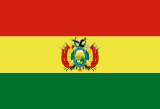

Bolivia
Last Updated: 2026-03-29
Official Portal: Servicio General de Identificación Personal (SEGIP)
Embassy Finder: Embassies & Consulates Worldwide
Quick Facts
| Category | Detail |
|---|---|
| Residency for citizenship | 3 years (general); 2 years (Ibero-Americans); 1 year (spouse of Bolivian) |
| Language requirement | No formal exam required |
| Cultural knowledge | No formal test |
| Processing time | 12–24 months |
| Application fee | ~$100–$250 USD |
| Dual citizenship | Conditional — permitted by the 2009 Constitution in principle; complex in practice |
Dual Citizenship
Bolivia’s approach to dual citizenship is one of the most philosophically interesting — and legally complex — in South America.
The 2009 Constitution of Bolivia (Article 143) states:
“Bolivian women and men who have acquired a foreign nationality do not lose their Bolivian nationality. Foreigners who acquire Bolivian nationality do not need to renounce their nationality of origin.”
In plain terms, this means:
- Bolivians naturalizing abroad: Do not automatically lose Bolivian nationality by acquiring a foreign nationality.
- Foreigners naturalizing in Bolivia: Are not required to renounce their original nationality.
However, the operative word is “conditional” because the practical implementation has been inconsistent. Historically, Bolivia required renunciation under earlier constitutional frameworks. The 2009 Constitution changed this, but procedural regulations and administrative practices have not always kept pace. Applicants should verify current procedural requirements with the Servicio General de Identificación Personal (SEGIP) and the Ministerio de Relaciones Exteriores.
Additionally, Bolivia’s plurinational framework — which recognizes 36 indigenous nations — introduces layers of identity and belonging that go beyond standard nationality law. Members of recognized indigenous nations have additional rights and identity recognition under the constitution.
Acquisition of Nationality
By Birth (Jus Soli)
Bolivia applies unrestricted jus soli. Any person born on Bolivian territory is a Bolivian national by birth, regardless of the parents’ nationality or immigration status. This right is enshrined in Article 141 of the 2009 Constitution.
Children born on Bolivian-registered aircraft or vessels also qualify.
By Descent (Jus Sanguinis)
Children born abroad to a Bolivian father or mother are Bolivian nationals by descent (Article 141.II of the 2009 Constitution). The acquisition of nationality by descent is automatic by law, but formalization typically requires:
- Registration of birth at the nearest Bolivian consulate, or
- Upon return to Bolivia, registration with the Civil Registry (SERECI — Servicio de Registro Cívico)
Bolivia does not formally limit jus sanguinis transmission by generation in the core constitutional text, though in practice second-generation and beyond may face additional evidentiary requirements.
By Adoption
Children adopted by Bolivian nationals — whether domestically or through international adoption recognized by Bolivia — may acquire Bolivian nationality. The process requires finalization of adoption through Bolivian courts or formal recognition of a foreign adoption decree under Bolivian law.
By Marriage
Bolivia does not grant automatic citizenship upon marriage to a Bolivian national. However, a foreign spouse of a Bolivian national benefits from a reduced 1-year residency requirement for naturalization under the privileged naturalization rules (see below).
There is no formal “spousal citizenship” track that bypasses residency entirely.
By Naturalization (Residency)
Standard Requirements
Under Bolivia’s Nationality Law (Law No. 370 and related regulations), foreign nationals may apply for Bolivian nationality after meeting the following:
General track (3 years):
- 3 years of continuous legal residence in Bolivia
- Renunciation of prior nationality (procedurally required under older frameworks — verify current status under 2009 Constitution)
- Absence of serious criminal record
- Proof of lawful means of livelihood
- Demonstration of integration into Bolivian society
Documentation required:
- Valid foreign passport
- Bolivian residence permit / cédula de identidad de extranjero
- Certificate of residence from SEGIP
- Criminal background check from country of origin (apostilled)
- Bolivian police clearance
- Financial solvency documentation or employment certificate
- Application to the Ministerio de Relaciones Exteriores and subsequent Supreme Decree issuance
Note: Naturalization in Bolivia is formally granted by Presidential Decree (Decreto Supremo), which must be signed by the President and relevant ministers. This makes the process inherently political-administrative and subject to governmental delays.
Reduced Residency Categories
Bolivia provides shortened naturalization periods for:
- Citizens of Ibero-American countries (Spain, Portugal, and Latin American nations): 2 years of legal residence
- Foreign spouses of Bolivian nationals: 1 year of legal residence
- Descendants of Bolivians born abroad: May qualify for expedited recognition depending on documentation
The Ibero-American reduced track reflects Bolivia’s historical and cultural ties to the broader Spanish-speaking world and is consistent with similar provisions found across the region.
Preferred Pathways
- Marriage to a Bolivian national: 1-year residency track. Best option for those with Bolivian spouses.
- Ibero-American track: 2-year residency. Best for citizens of Spain, Portugal, and Latin American countries.
- Standard residency track: 3 years. Available to all nationals.
- Descent registration: Immediate for qualifying children of Bolivian parents born abroad.
- Jus soli: Automatic for those born on Bolivian territory.
Special Clauses & Programs
Plurinational Framework
Bolivia’s 2009 Constitution is one of the most innovative in the world in terms of indigenous rights. The state officially recognizes 36 indigenous peoples and nations, each with their own languages, customs, and governance structures. Some recognized indigenous groups include Quechua, Aymara, Guaraní, Uru, Chipaya, and 32 others.
For individuals with credible ancestry from these nations, Bolivia offers pathways to cultural and national identity recognition that go beyond standard nationality law. Indigenous community membership is governed partly by customary law within those communities.
Bolivia’s constitution mandates that indigenous languages (particularly Quechua and Aymara) be co-official alongside Spanish, and government institutions in affected regions must operate in those languages.
Bolivia’s Geopolitical Position
Bolivia is a landlocked country bordered by Peru, Chile, Brazil, Paraguay, and Argentina. It lost its coastal territory to Chile in the War of the Pacific (1879–1884) — a grievance that remains a defining aspect of Bolivian national identity. Ongoing efforts at the International Court of Justice to regain sea access have been unsuccessful (2018 ruling) but politically important.
The country holds the world’s largest lithium reserves (Salar de Uyuni), making it a significant geopolitical player in the global energy transition. This context is relevant for investors and entrepreneurs evaluating Bolivia’s long-term economic potential.
Mercosur Associate Status
Bolivia became a full Mercosur member in 2024 (after years as an associate). This opens residency facilitation pathways for citizens of other Mercosur members (Argentina, Brazil, Paraguay, Uruguay) under the Mercosur Residence Agreement.
Investment Pathways
Citizenship by Investment (CBI)
Bolivia does not have a formal citizenship-by-investment program.
Residency by Investment (RBI)
Bolivia does not have a formal investor visa program equivalent to those of Uruguay or Paraguay. Foreign investment is welcome and can support residency applications in practice, but there is no standardized investment threshold that automatically qualifies for residency.
Investors typically establish a Bolivian business entity and apply for temporary/permanent residency through the standard immigration channels, using the business as a basis for demonstrating ties to Bolivia.
Key sectors for investment attention: lithium extraction and processing, natural gas, agriculture (especially in the Santa Cruz lowlands), and renewable energy.
Business & Entrepreneurship
Company Formation
Bolivia’s main corporate forms:
- Sociedad de Responsabilidad Limitada (S.R.L.): Most common for small-medium businesses. Limited liability, simpler than an S.A.
- Sociedad Anónima (S.A.): Corporation form for larger enterprises or those seeking outside investment.
- Empresa Unipersonal: Sole proprietorship, registered with SEPREC (Servicio Plurinacional de Registro de Comercio).
Company registration involves SEPREC, the tax authority (SIN — Servicio de Impuestos Nacionales), and municipal licensing. Process typically takes 4–8 weeks.
Bolivia requires a local legal representative for foreign companies operating in-country. Foreign ownership of Bolivian companies is generally permitted, though strategic sectors (hydrocarbons, mining) have state participation requirements.
Entrepreneur & Startup Visas
Bolivia does not have a dedicated entrepreneur or startup visa. The business formation process is relatively accessible, and a registered business can support a work/residency visa application.
The Santa Cruz de la Sierra region (Bolivia’s economic hub) has a growing private sector and agro-industrial base that is more investor-friendly than the highland cities.
Tax Overview
Bolivia operates a relatively straightforward tax system:
- Corporate income tax (IUE): 25% on net taxable income. MNCs with significant intra-group transactions face additional scrutiny.
- VAT (IVA): 13% (one of the lowest in South America)
- Transaction tax (IT): 3% on gross revenues (applied as a substitute for IUE in some cases)
- Resource Control Tax: Additional taxes apply to hydrocarbons and mining
- No wealth tax for individuals
- Dividends: Taxed at source; withholding applies to remittances abroad
Bolivia does not have territorial taxation for individuals. Residents are taxed on worldwide income.
Banking & Financial Infrastructure
Bolivia’s banking sector is state-influenced and functional but limited by regional standards. The Banco Central de Bolivia (BCB) manages monetary policy; the country uses the Boliviano (BOB) and has maintained a fixed exchange rate for many years.
- BNB (Banco Nacional de Bolivia): Largest private bank
- Banco Unión: State-owned, significant rural presence
- Opening accounts as a foreign resident requires standard KYC documentation plus residency permits
Bolivia has active microfinance sector (MFIs) serving agricultural and small business segments — a development finance strength.
Key Programs & Incentives
- Mining and hydrocarbon sectors: State-controlled (YPFB for gas; COMIBOL for mining) but open to joint ventures
- Industrialization of lithium (YLB): Government-led; foreign partnerships being explored
- Agro-industrial Santa Cruz: Fastest-growing economic region; open to private investment
- Free trade zones: Limited development compared to neighboring countries
Loss of Nationality
Voluntary Renunciation
Under the 2009 Constitution and related laws, Bolivian nationals may renounce their nationality through a formal declaration at the Registro Civil or at a Bolivian consulate abroad. A formal renunciation document must be submitted and processed.
Involuntary Loss
Under the 2009 Constitution framework, Bolivia generally does not strip nationality for acquiring a foreign citizenship. However, naturalized citizens (those who obtained citizenship by naturalization rather than birth) could theoretically have citizenship revoked through judicial process if fraud was involved in the original application.
Natural-born Bolivians have constitutionally protected nationality that cannot be administratively stripped.
Recovery / Resumption
Bolivians who lost or renounced nationality under the pre-2009 constitutional framework may apply for restitution under current law, given the more permissive 2009 provisions. Those who were stripped under the old law due to foreign naturalization have the strongest basis for recovery given the explicit constitutional reversal of that policy.
Applications for recovery are processed through the Ministerio de Relaciones Exteriores and the Registro Civil.
Practical Guide
Documents Needed
For standard naturalization:
- Valid foreign passport
- Bolivian cédula de identidad de extranjero (SEGIP)
- Proof of continuous legal residence (3 years, 2 years for Ibero-Americans, 1 year for spouses)
- Criminal background check from country of origin (apostilled, translated into Spanish)
- Bolivian police clearance (FELCC — Fuerza Especial de Lucha Contra el Crimen)
- Proof of financial solvency (bank statements, employment contract, business registration)
- Marriage certificate (if applying under spousal category — apostilled and translated)
- Medical certificate of physical and mental health (some processes require)
- Application petition directed to the President of Bolivia via Ministerio de Relaciones Exteriores
Where to Submit
- Ministerio de Relaciones Exteriores: Primary submission authority for naturalization applications
- SEGIP: For biometric identity enrollment and cédula de extranjero
- SERECI: For civil registry matters (birth registrations, descent claims)
- Bolivian Consulates abroad: For descent registration and consular services
Processing Time
- Residency permit: 2–6 months
- Naturalization application to Presidential Decree issuance: 12–36 months (highly variable)
- Total path from arrival to citizenship: 4–6 years (standard track)
Bolivia’s naturalization processing is slower than Uruguay or Paraguay. The requirement for a Presidential Decree introduces administrative delays that are largely outside the applicant’s control.
Fees
- Residency application: ~$100–$200 USD
- SEGIP enrollment: Nominal
- Foreign police clearance apostille: Variable (~$50–$150 USD)
- Translation services: Variable
- Naturalization petition fees: ~$100–$250 USD in government fees
Related Countries
- Peru — Similar Andean context; large Quechua-speaking population; 2-year naturalization for Ibero-Americans.
- Paraguay — Mercosur member; easier business climate; full dual citizenship.
- Argentina — Major destination for Bolivian emigrants; 2-year naturalization; strong institutional framework.
- Brazil — Mercosur partner; large economy; 4-year naturalization for Portuguese speakers.
- Spain — 2-year naturalization for Ibero-Americans with Bolivian heritage; EU passport access.
Sources
- Political Constitution of the Plurinational State of Bolivia (2009) — Articles 141–145
- Law No. 370 on Migration (2013) and related regulations
- SEGIP Bolivia: segip.gob.bo
- Ministerio de Relaciones Exteriores: cancilleria.gob.bo
- SERECI Bolivia: sereci.oep.org.bo
- Henley Passport Index 2025
- Transparency International CPI 2024
- UNDP Human Development Report 2024
- World Happiness Report 2025
- Global Peace Index 2025 (Institute for Economics and Peace)
- Heritage Foundation Index of Economic Freedom 2025