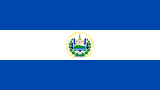

El Salvador
Last Updated: 2026-03-22
Official Portal: Ministerio de Relaciones Exteriores de El Salvador
Embassy Finder: Salvadoran Embassies & Consulates Worldwide
Quick Facts
| Category | Detail |
|---|---|
| Residency for citizenship | 5 years (standard); 1 year (Central Americans, Spaniards, Ibero-Americans by birth) |
| Language requirement | No formal language exam (Spanish proficiency expected in practice) |
| Cultural knowledge | No formal exam required |
| Processing time | 6-18 months after application submission |
| Application fee | ~$25-$50 USD (government fees; additional costs for apostilles and translations) |
| Dual citizenship | Yes — recognized since 1983 Constitution |
Dual Citizenship
Yes — El Salvador recognizes dual and multiple nationality. The 1983 Constitution of the Republic of El Salvador does not require renunciation of prior nationality upon acquiring Salvadoran citizenship, nor does it revoke Salvadoran nationality for citizens who acquire a foreign nationality.
Constitutional basis: Article 90 of the Constitution establishes that Salvadorans by birth retain their nationality even if they acquire citizenship of another country. Article 91 addresses naturalized citizens and similarly does not impose a loss of nationality for acquiring foreign citizenship.
El Salvador is notably permissive on dual citizenship. Unlike some Latin American countries that only introduced dual citizenship protections in the 1990s or 2000s, El Salvador’s 1983 Constitution embedded this principle from the outset. Salvadorans living abroad (a massive diaspora, particularly in the United States) have always been able to maintain their Salvadoran nationality regardless of naturalizing elsewhere.
Key note for the diaspora: An estimated 2.5+ million Salvadorans live in the United States. Salvadoran nationality by birth is never lost, meaning U.S.-naturalized Salvadorans remain Salvadoran nationals and can obtain Salvadoran passports, vote in Salvadoran elections, and transmit nationality to their children.
Acquisition of Nationality
By Birth (Jus Soli)
El Salvador applies unrestricted jus soli. Any person born on Salvadoran territory acquires Salvadoran nationality by birth, regardless of the nationality of their parents.
Constitutional basis: Article 90(1) of the Constitution of the Republic of El Salvador.
This includes:
- Children born anywhere within Salvadoran national territory (including territorial waters and airspace)
- Children born on Salvadoran-registered vessels or aircraft while in international waters or airspace
Additionally, Article 90(3) extends jus soli nationality to children of a Salvadoran father or mother born in the territory of the former Federal Republic of Central America (the historical federation comprising El Salvador, Guatemala, Honduras, Nicaragua, and Costa Rica). This reflects El Salvador’s deep commitment to Central American unity.
By Descent (Jus Sanguinis)
Salvadoran nationality by birth extends to children born abroad to Salvadoran parents:
| Scenario | Requirement | Constitutional Basis |
|---|---|---|
| Born abroad to a Salvadoran father or mother | At least one parent is Salvadoran national by birth | Art. 90(2) |
| Born abroad in Central American territory to Salvadoran parents | At least one parent is Salvadoran | Art. 90(3) |
| Born abroad — child of naturalized Salvadoran | May register for nationality; some restrictions may apply | Art. 90, Ley de Extranjeria |
Registration requirement: Children born abroad to Salvadoran parents must be registered at a Salvadoran consulate. There is no deadline for registration, and adults who discover their claim to Salvadoran nationality by descent may file at any age.
Generational transmission: The Constitution does not impose an explicit generational limit. A child born abroad to a Salvadoran-born-abroad parent can claim nationality, provided the chain of Salvadoran parentage is documented.
By Adoption
Adoption does not automatically confer Salvadoran nationality. However:
- A foreign child adopted by Salvadoran nationals may be registered for Salvadoran nationality if the adoption is legally recognized in El Salvador
- Minor children adopted before age 18 generally qualify for nationality registration through their adoptive Salvadoran parents
- Adult adoptees would need to pursue naturalization through standard or reduced-residency channels
By Marriage
Marriage to a Salvadoran national does not automatically confer nationality. However, the Constitution provides a facilitated path:
| Requirement | Detail |
|---|---|
| Residency | 1 year of legal residence in El Salvador (if spouse is Salvadoran by birth) |
| Marriage status | Must be legally married to a Salvadoran national at time of application |
| Good conduct | Clean criminal record required |
| Intent | Must express willingness to become Salvadoran |
| Language | No formal exam, but Spanish proficiency expected |
Constitutional basis: Article 92(3) provides that foreigners married to Salvadorans by birth who have resided in the country for two or more years prior to and at the time of application may naturalize. In practice, the marriage category is often combined with the Central American or Ibero-American preference, which can reduce the requirement to one year.
By Naturalization (Residency)
Foreign nationals who have resided legally in El Salvador may apply for naturalization (carta de naturalizacion).
Standard Requirements
| Requirement | Detail |
|---|---|
| Legal residency | 5 consecutive years of legal residence in El Salvador |
| Good conduct | Clean criminal record in El Salvador and country of origin |
| Financial solvency | Must demonstrate lawful means of subsistence or profession |
| Intent | Formal declaration of intent to become Salvadoran |
| Renunciation | Not required (dual citizenship permitted) |
| Language | No formal Spanish exam, but ability to communicate in Spanish is expected |
| Health | Must be in good physical and mental health |
Reduced Residency Categories
| Category | Residency Required | Constitutional/Legal Basis |
|---|---|---|
| Standard (any nationality) | 5 years | Art. 92(4), Constitution |
| Nationals of Central American republics (Guatemala, Honduras, Nicaragua, Costa Rica) | 1 year | Art. 92(1), Constitution |
| Nationals of Spain (Spaniards by birth) | 1 year | Art. 92(1), Constitution |
| Nationals of Ibero-American countries (by birth) | 1 year | Art. 92(1), Constitution |
| Married to a Salvadoran national | 2 years (1 year if Central American or Ibero-American) | Art. 92(3), Constitution |
| Foreigners of notable service to El Salvador | Discretionary (may be waived) | Art. 92, legislative decree |
| Foreigners who establish new industries or enterprises | Reduced (case-by-case) | Art. 92(2), Constitution |
Note on Central American preferential treatment: Article 92(1) of the Constitution is remarkably generous — nationals of Guatemala, Honduras, Nicaragua, and Costa Rica need only one year of residence to naturalize in El Salvador. This reflects the historical ties of the former Federal Republic of Central America and the ongoing CA-4 free movement agreement.
Preferred Pathways
El Salvador extends preferential treatment to nationals of countries with historical, linguistic, and cultural ties. The CA-4 agreement and broader Ibero-American connections create some of the most accessible naturalization pathways in the Americas.
Reduced Residency (1 Year Instead of 5)
| Your Nationality | Standard Requirement | With Preferred Status | Legal Basis |
|---|---|---|---|
| Guatemala | 5 years | 1 year | Art. 92(1), Constitution (Central American) |
| Honduras | 5 years | 1 year | Art. 92(1), Constitution (Central American) |
| Nicaragua | 5 years | 1 year | Art. 92(1), Constitution (Central American) |
| Costa Rica | 5 years | 1 year | Art. 92(1), Constitution (Central American) |
| Spain | 5 years | 1 year | Art. 92(1), Constitution (Spaniards by birth) |
| Mexico | 5 years | 1 year | Art. 92(1), Constitution (Ibero-American by birth) |
| Brazil | 5 years | 1 year | Art. 92(1), Constitution (Ibero-American by birth) |
| Portugal | 5 years | 1 year | Art. 92(1), Constitution (Ibero-American by birth) |
| Argentina | 5 years | 1 year | Art. 92(1), Constitution (Ibero-American by birth) |
| Colombia | 5 years | 1 year | Art. 92(1), Constitution (Ibero-American by birth) |
| Any other Latin American country | 5 years | 1 year | Art. 92(1), Constitution (Ibero-American by birth) |
The term “Ibero-American” is interpreted to include all countries of the Americas that share Iberian (Spanish or Portuguese) linguistic and cultural heritage, as well as Spain and Portugal themselves.
CA-4 Free Movement Zone
El Salvador is a member of the CA-4 (Central America-4) free movement agreement alongside Guatemala, Honduras, and Nicaragua. Key provisions:
| Feature | Detail |
|---|---|
| Free movement | Citizens of CA-4 countries may move freely across borders without passports (national ID card sufficient) |
| No visa required | Unlimited stays for CA-4 nationals |
| Right to work | Facilitated work permits for CA-4 nationals |
| Naturalization | Only 1 year of residency required for citizenship |
| Historical basis | These four countries plus Costa Rica formed the Federal Republic of Central America (1823-1841) |
The CA-4 agreement was formalized in June 2006 and represents one of the most integrated free movement zones in the Americas. For practical purposes, a Guatemalan, Honduran, or Nicaraguan citizen can relocate to El Salvador, live and work there with minimal bureaucratic friction, and apply for naturalization after just one year of residence.
Where Your Passport Opens Doors
Salvadoran citizens receive preferential treatment in the following contexts:
| Country/Region | Benefit | Basis |
|---|---|---|
| CA-4 countries (Guatemala, Honduras, Nicaragua) | Passport-free travel, right of residence | CA-4 Agreement |
| Central America (Costa Rica, Panama, Belize) | Visa-free entry | Bilateral agreements |
| Most of Latin America | Visa-free entry (30-90 days) | Bilateral agreements |
| South Korea | Visa-free up to 90 days | Bilateral agreement |
| Taiwan | Visa-free up to 90 days | Diplomatic relations |
| Philippines | Visa-free up to 30 days | Bilateral agreement |
| Russia | Visa-free up to 90 days | Bilateral agreement |
| Turkey | Visa-free up to 90 days | Bilateral agreement |
| Japan | Visa-free up to 90 days | Bilateral agreement |
| Spain | Reduced naturalization (2 years instead of 10) | Bilateral convention on dual nationality |
Special Clauses & Programs
Central American Union Provisions
El Salvador’s Constitution contains some of the strongest Central American unionist language of any country in the region. Article 89 states that El Salvador will promote the reconstruction of the Central American Republic “in any form, unitary, federal, or confederate,” and empowers the executive to implement agreements toward political, economic, and social integration with Central American states without requiring a new constitutional process. This ideological commitment directly shapes nationality law — the preferential 1-year naturalization for Central Americans is a constitutional expression of this vision.
Nationality for Service to the Republic
The Constitution and secondary legislation allow for expedited or waived residency requirements for foreigners who have rendered notable services to El Salvador in cultural, scientific, industrial, commercial, or other domains of national benefit. This is granted by legislative decree on a case-by-case basis.
Nationality for Industrial/Enterprise Founders
Article 92(2) provides a specific preference for foreigners who have resided in El Salvador for one or more years and have established new industries or enterprises of notable utility. The combination of enterprise creation and reduced residency creates an entrepreneur-friendly pathway to citizenship.
Honorary Nationality
The Asamblea Legislativa (Legislative Assembly) may confer honorary Salvadoran nationality to foreign nationals who have provided exceptional service to the nation. This is rare and ceremonial.
No Traditional Citizenship by Investment Program
El Salvador does not offer a conventional citizenship-by-investment (CBI) or “golden passport” program in the Caribbean or Malta model. However, the Bitcoin-related residency programs (see Investment Pathways below) and the enterprise-creation provisions in Article 92(2) provide investment-adjacent pathways.
Investment Pathways
Citizenship by Investment (CBI)
Not available in the traditional sense. El Salvador does not offer a direct cash-for-passport program. However, the enterprise-creation preference in Article 92(2) of the Constitution provides a pathway where foreign nationals who establish industries or enterprises of notable utility may qualify for reduced residency (as little as 1 year) before naturalization.
Bitcoin Freedom Visa / Residency Programs
El Salvador made global headlines in September 2021 by becoming the first country in the world to adopt Bitcoin as legal tender (alongside the U.S. dollar) through the Bitcoin Law (Ley Bitcoin). Building on this, El Salvador has introduced several programs aimed at attracting crypto investors and digital entrepreneurs:
| Program | Requirements | Benefits | Notes |
|---|---|---|---|
| Freedom Visa (Visa de Libertad) | Deposit of $1 million USD in Bitcoin (BTC) or USDT to a government-designated fund | Permanent residency + path to citizenship | Announced in 2024; targets high-net-worth crypto investors; deposit is an investment in El Salvador’s Bitcoin reserves |
| Bitcoin Residency | Investment in Bitcoin-related activities or proof of significant Bitcoin holdings | Temporary residency | Designed for Bitcoin entrepreneurs and investors |
| Digital Nomad / Remote Worker | Proof of remote income ($1,450+/month) | Temporary residency (up to 2 years, renewable) | Not Bitcoin-specific but part of the broader digital economy push |
Freedom Visa details: The Freedom Visa program, announced by President Nayib Bukele’s government, is aimed at attracting global investors willing to make a $1 million contribution (in Bitcoin or Tether) to El Salvador. In exchange, participants receive permanent residency and an expedited path to Salvadoran citizenship. The program is explicitly designed to grow the country’s Bitcoin reserves and attract high-net-worth individuals who share El Salvador’s vision for cryptocurrency adoption.
Important caveats:
- Program terms and availability may shift as El Salvador’s Bitcoin strategy evolves
- The regulatory framework is still maturing — prospective applicants should verify current terms directly with the Ministerio de Relaciones Exteriores or authorized immigration attorneys
- El Salvador’s Bitcoin adoption has been met with both enthusiasm from the crypto community and caution from international financial institutions (such as the IMF)
Traditional Residency by Investment
Beyond the Bitcoin-specific programs, El Salvador offers standard residency based on economic activity:
| Pathway | Requirements | Visa Type | Notes |
|---|---|---|---|
| Investor/Rentista | Proof of stable income or pension (~$1,000+/month) | Residente Temporal | Renewable annually |
| Business establishment | Formation of a company + active business operations | Residente Temporal | Must demonstrate economic benefit and job creation |
| Real estate ownership | Property purchase (no fixed minimum) | Supports residency application | Property ownership alone is not sufficient; must be combined with other residency grounds |
| Pensionado/Retiree | Proof of pension or stable income ($800+/month) | Residente Permanente | Favorable terms for retirees; low cost of living is a major draw |
Path to citizenship: After establishing legal residency and meeting the required residency duration (1 year for Central Americans/Ibero-Americans, 5 years for others), residents may apply for naturalization.
Business & Entrepreneurship
El Salvador has positioned itself as one of the most crypto-forward nations on Earth. Under President Nayib Bukele, the country has aggressively pursued foreign investment through Bitcoin adoption, tax incentives, and a streamlined business environment. The dollarized economy (El Salvador has used the U.S. dollar as its official currency since 2001, now alongside Bitcoin) removes currency risk for North American and European investors. Security improvements under the state of exception have dramatically reduced crime, making the country more attractive for business. However, the small domestic market (6.5 million people), developing infrastructure outside San Salvador, and institutional risks temper the overall picture.
Company Formation
| Most common entity type | Sociedad Anonima de Capital Variable (S.A. de C.V.) |
| Formation timeline | 2-4 weeks |
| Formation cost | ~$800-$2,000 USD (including legal, registration, and notary fees) |
| Minimum capital | $2,000 USD (11,400 colones equivalent; paid in USD) |
| Online registration | Partial — Centro Nacional de Registros (CNR) handles registration; some steps available online via MiEmpresa.gob.sv |
The S.A. de C.V. (variable capital corporation) is the most common structure for foreign investors and medium-to-large businesses. The S. de R.L. (limited liability company) is available for smaller operations. Formation requires a Salvadoran notary (notario), registration with the Centro Nacional de Registros (CNR), registration with the Ministerio de Hacienda (tax authority), and enrollment in the social security system (ISSS) and pension system (AFP).
Foreign ownership: Foreign nationals may own 100% of a Salvadoran company. There are no general restrictions on foreign ownership, though certain sectors (mining, some natural resources) may have regulatory requirements. El Salvador’s Investment Law (Ley de Inversiones) guarantees equal treatment for foreign and domestic investors.
Single-window registration: The government has introduced MiEmpresa (mi empresa = my company), a single-window system intended to streamline company formation by consolidating multiple registrations into one process.
Entrepreneur & Startup Visas
El Salvador does not have a dedicated “startup visa” in the formal sense, but several pathways serve entrepreneurs:
- Temporary Resident Visa (Residente Temporal): Allows engagement in business activities; renewable annually for up to 5 years; requires proof of income or economic activity
- Investor Visa: For foreigners establishing or investing in Salvadoran businesses; requires proof of investment and a viable business plan
- Freedom Visa: For high-net-worth individuals making a $1 million Bitcoin/USDT investment (see Investment Pathways above)
- Digital Nomad Program: For remote workers earning $1,450+/month from foreign sources; 2-year duration with tax exemptions on foreign-sourced income
- Enterprise-Based Naturalization: Article 92(2) of the Constitution offers reduced residency requirements for foreigners who establish new industries or enterprises of notable utility — effectively an entrepreneur-to-citizenship pathway
Tax Overview
| Corporate tax rate | 25% (standard) / 30% (revenue over $150,000 USD) |
| VAT (IVA) | 13% |
| Capital gains tax | 10% |
| Personal income tax (top rate) | 30% (above $22,857.14 USD annually) |
| Tax on dividends | 5% withholding |
| Tax treaty network | Limited (treaties with Spain, some others in negotiation) |
| Bitcoin as legal tender | Yes — since September 7, 2021 (Ley Bitcoin, Legislative Decree No. 57) |
| Tax on Bitcoin gains | 0% — capital gains on Bitcoin are tax-exempt for foreign investors under the 2023 amendments |
Bitcoin legal tender status: El Salvador’s Ley Bitcoin (Bitcoin Law), enacted June 8, 2021 and effective September 7, 2021, makes Bitcoin legal tender alongside the U.S. dollar. All businesses are required to accept Bitcoin as payment (though practical enforcement varies). The government launched the Chivo Wallet for Bitcoin transactions and installed Bitcoin ATMs nationwide.
Tax exemptions for Bitcoin investors: In a major move to attract crypto capital, El Salvador eliminated capital gains taxes and income taxes on Bitcoin profits for foreign nationals. This makes it one of the most tax-favorable jurisdictions in the world for cryptocurrency holders.
Territorial taxation notes: El Salvador generally taxes on a worldwide basis for residents. However, the Bitcoin tax exemption and digital nomad program carve out significant exceptions for foreign-sourced income and cryptocurrency gains. Prospective residents should consult a Salvadoran tax advisor for current structuring options.
Free trade zones: El Salvador operates free trade zones (zonas francas) offering significant tax incentives:
- 100% exemption from income tax for up to 20 years
- 100% exemption from import duties on raw materials and equipment
- 100% exemption from municipal taxes
- Available for manufacturing, services, and call center operations
Banking & Financial Infrastructure
- Major banks: Banco Agricola (largest, Bancolombia subsidiary), Banco Cuscatlan (Grupo Terra), Banco Davivienda, Scotiabank El Salvador, Banco de America Central (BAC Credomatic)
- Digital banks/fintech: Chivo Wallet (government Bitcoin wallet), Strike, Flexa; fintech ecosystem is growing but still early-stage
- Currency: U.S. Dollar (official since 2001) + Bitcoin (legal tender since 2021)
- Stripe: Not yet available in El Salvador (as of 2026)
- SWIFT/wire transfers: Available through all major banks
- Banking access for foreigners: Requires valid residency card (carnet de residente) or DUI (national ID for citizens); some banks accept passport for basic accounts
- Remittances: El Salvador receives ~$8 billion annually in remittances (primarily from the U.S.), representing approximately 25% of GDP — one of the highest ratios in the world
- Bitcoin infrastructure: 200+ Chivo ATMs nationwide, Bitcoin-accepting businesses (especially in El Zonte / “Bitcoin Beach”), government-promoted Bitcoin bond (Volcano Bond) initiatives
Key Programs & Incentives
- PROESA (Export and Investment Promotion Agency of El Salvador) — The primary government agency for attracting foreign investment; provides advisory services, site selection, and aftercare for foreign companies establishing operations
- Free Trade Zones (Zonas Francas) — Up to 20-year tax holidays for qualifying companies (manufacturing, services, technology, call centers)
- CONAMYPE — National Commission for Micro and Small Enterprises; provides training, financing, and support for small businesses
- BANDESAL — Development Bank of El Salvador; offers financing for productive investment and entrepreneurship
- Bitcoin Beach (El Zonte) — The original Bitcoin circular economy community; now a global reference point for grassroots Bitcoin adoption
- Surf City initiative — Government tourism and investment campaign promoting El Salvador’s Pacific coastline for tourism, hospitality, and real estate development
- San Salvador — The capital and primary business hub; modern infrastructure, international airport (SAL), and growing tech scene
- Antiguo Cuscatlan / Santa Tecla — Upscale business districts adjacent to San Salvador; popular with foreign entrepreneurs and digital nomads
- Volcano Bond (Bitcoin Bond) — Proposed sovereign bond backed by Bitcoin revenue and geothermal energy; intended to fund “Bitcoin City,” a planned special economic zone at the base of Conchagua volcano
Loss of Nationality
Voluntary Renunciation
- Nationals by birth: May voluntarily renounce Salvadoran nationality, but this is extremely rare and discouraged. In practice, El Salvador makes renunciation difficult for birth nationals.
- Naturalized citizens: May voluntarily renounce by formal declaration before the appropriate authority.
Involuntary Loss
Nationals by birth: Under the 1983 Constitution, Salvadoran nationality acquired by birth is extremely robust. Article 90 does not provide for involuntary loss of nationality by birth. Acquiring a foreign citizenship does not cause loss of Salvadoran nationality.
Naturalized citizens may lose their Salvadoran nationality in the following cases (Article 94 of the Constitution):
| Cause | Detail |
|---|---|
| Residing in the country of origin for 2+ consecutive years | Continuous residence of 2+ years in the country of previous nationality (without authorization) |
| Absence from El Salvador for 5+ consecutive years | Staying outside of El Salvador for more than 5 continuous years (rebuttable; exceptions for those in official service or with authorized reasons) |
| Fraud | If the naturalization was obtained through false information, fraudulent documents, or deception |
| Acts against the state | Engaging in activities deemed contrary to the security or interests of El Salvador |
| Constitutional or legal grounds | Other grounds specified by law |
Note: The asymmetry between birth nationals and naturalized citizens is deliberate. Salvadorans by birth enjoy virtually irrevocable nationality, while naturalized citizens face stricter requirements regarding continued ties to El Salvador.
Recovery / Resumption
| Scenario | Process |
|---|---|
| Salvadoran by birth who renounced | May recover nationality by returning to El Salvador and filing a declaration with the Ministerio de Relaciones Exteriores |
| Naturalized Salvadoran who lost nationality | Must apply for naturalization again from scratch |
| Salvadorans abroad who never lost nationality | No recovery needed — nationality by birth is retained automatically regardless of foreign citizenship acquired |
Practical Guide
Documents Needed
For naturalization by residency (standard checklist):
Completed naturalization application form
Valid passport (original + certified copy)
Current Salvadoran residency card (carnet de residente) — original + copy
Birth certificate (original, apostilled or legalized, translated into Spanish by a certified translator)
Criminal background check from country of origin (apostilled, translated, recent — typically less than 6 months old)
Criminal background check from El Salvador (issued by the Policia Nacional Civil or relevant authority)
Medical certificate / health clearance
Two or more passport-sized photographs (white background, front-facing)
Marriage certificate (if applying under marriage category — apostilled, translated)
Spouse’s Salvadoran nationality documentation (if applying under marriage category)
Proof of financial solvency (bank statements, employment letter, business registration)
Proof of continuous residence in El Salvador (utility bills, lease agreement, employment records)
Payment receipt for application fee
Letter of intent / declaration of desire to become Salvadoran
For registration of nationality by descent (born abroad to Salvadoran parents):
Birth certificate of the applicant (apostilled, translated)
Birth certificate of the Salvadoran parent(s) (proving Salvadoran nationality)
Salvadoran parent’s DUI or passport
Valid foreign passport or ID of the applicant
Two passport-sized photographs
Where to Submit
| Location | Office | Notes |
|---|---|---|
| Inside El Salvador | Ministerio de Relaciones Exteriores, Direccion General de Extranjeria, San Salvador | In-person appointment; primary processing center |
| From abroad | Salvadoran consulate in your country of residence | Consulate forwards file to San Salvador for processing |
| Online | Limited online services via rree.gob.sv | Appointment scheduling may be available; most steps require in-person presence |
No formal exams: Unlike Mexico, El Salvador does not require a formal Spanish language exam or cultural knowledge test for naturalization. The process is primarily documentation-based, with an interview to assess intent and basic communication ability.
Processing Time
| Stage | Estimated Time |
|---|---|
| Document gathering and preparation | 1-3 months |
| Application submission to decision | 6-12 months |
| Issuance of naturalization certificate | 1-3 months after approval |
| DUI (national ID) and passport issuance | 1-4 weeks after naturalization |
| Total (typical) | 8-18 months |
Processing times vary significantly. Applications from CA-4 nationals with complete documentation tend to be faster. Complex cases or applications filed at consulates abroad may take longer.
Fees
| Item | Approximate Cost (USD) |
|---|---|
| Naturalization application | $25-$50 |
| Residency application (initial) | $30-$100 |
| Residency renewal (annual) | $20-$50 |
| Salvadoran passport issuance | $25-$40 |
| DUI (national ID) issuance | $10-$20 |
| Apostille per document (foreign) | Varies by country ($10-$100 per document) |
| Certified translation per document | $30-$100 per document |
| Criminal background check (El Salvador) | $10-$25 |
Note: El Salvador’s naturalization fees are among the lowest in the Americas. Fees are published by the Ministerio de Relaciones Exteriores and are subject to change. Verify current amounts at rree.gob.sv or at your local Salvadoran consulate. Because El Salvador uses the U.S. dollar, there is no currency conversion risk for American applicants.
Related Countries
Countries with treaty-based, preferential, or historically significant nationality relationships with El Salvador:
- Guatemala — CA-4 partner; 1-year naturalization; shared history as Federal Republic of Central America members; closest economic and cultural ties
- Honduras — CA-4 partner; 1-year naturalization; shared border and migration patterns; Football War (1969) shaped bilateral relations
- Nicaragua — CA-4 partner; 1-year naturalization; fellow Federal Republic member
- Costa Rica — Former Federal Republic member; 1-year naturalization (Ibero-American/Central American preference); not CA-4 member
- Mexico — Ibero-American preference (1-year naturalization); major migration corridor; significant Salvadoran diaspora in Mexico
- United States — Largest Salvadoran diaspora (2.5+ million); TPS (Temporary Protected Status) for Salvadorans since 2001; massive remittance corridor (~$8 billion/year); no preferential naturalization but deep economic ties
- Spain — Spaniards by birth qualify for 1-year naturalization in El Salvador; Salvadorans qualify for reduced (2-year) naturalization in Spain under bilateral convention
- Brazil — Ibero-American preference (1-year naturalization)
- Portugal — Ibero-American preference (1-year naturalization)
- Panama — Central American neighbor; not CA-4 but close economic ties; SICA (Central American Integration System) partner
Sources
- Constitucion de la Republica de El Salvador (1983, as amended), Articles 89-100 — asamblea.gob.sv
- Ley de Extranjeria (Aliens Law) — Governs residency, naturalization procedures, and immigration matters
- Ley de Migracion (Migration Law) — Entry, exit, and residence of foreigners
- Ley Bitcoin (Bitcoin Law), Legislative Decree No. 57, June 8, 2021 — diariooficial.gob.sv
- Ministerio de Relaciones Exteriores de El Salvador — rree.gob.sv
- Direccion General de Migracion y Extranjeria — migracion.gob.sv
- PROESA (Export and Investment Promotion Agency) — proesa.gob.sv
- CA-4 Agreement (Central America-4 Border Control Agreement), June 2006
- Centro Nacional de Registros (CNR) — Company registration — cnr.gob.sv
- Wikipedia — Salvadoran nationality law