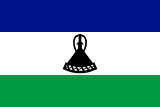

Lesotho
Last Updated: 2026-04-02
Official Portal: Ministry of Home Affairs — Lesotho
Embassy Finder: Ministry of Foreign Affairs and International Relations
Quick Facts
| Category | Details |
|---|---|
| Residency for naturalization | 5 years continuous residence |
| Language requirement | Knowledge of Sesotho or English |
| Civics test | No formal test |
| Processing time | 12—24 months |
| Naturalization fee | Approximately LSL 500—1,500 (USD 27—82) |
| Dual citizenship | Not permitted |
| Citizenship by birth in Lesotho | No automatic jus soli for children of foreign parents |
| Citizenship by descent | Patrilineal emphasis; reforms underway |
| Governing law | Constitution of Lesotho, 1993 (Sections 38—44); Lesotho Citizenship Order, 1971 |
Dual Citizenship
Lesotho does not permit dual citizenship. Under Section 40 of the 1993 Constitution, a citizen of Lesotho who acquires the citizenship of another country ceases to be a citizen of Lesotho.
Key implications:
- A person who voluntarily acquires foreign citizenship automatically loses Lesotho citizenship.
- A foreign national applying for naturalization must renounce all other nationalities.
- Persons who acquire dual nationality at birth (through parentage) must choose one citizenship upon reaching the age of majority.
This prohibition particularly affects the large Basotho diaspora in South Africa, where many Lesotho citizens work under migrant labor arrangements in the mining sector and other industries.
Acquisition of Nationality
By Birth (Jus Soli)
Lesotho does not apply unrestricted jus soli. Birth on Lesotho territory alone does not confer citizenship. A child born in Lesotho acquires citizenship only if the child’s father is a citizen of Lesotho at the time of birth.
By Descent (Jus Sanguinis)
Citizenship by descent has historically been patrilineal:
- Father is a citizen: A person born to a Lesotho citizen father, whether inside or outside Lesotho, acquires citizenship automatically.
- Mother is a citizen: The 1993 Constitution and the 1971 Citizenship Order did not originally provide for transmission through the mother alone. However, court decisions and proposed constitutional amendments have challenged this gender discrimination. In practice, children of Lesotho citizen mothers and foreign fathers may now apply for citizenship, though the process is less automatic.
Gender discrimination: Multiple court cases and advocacy efforts have highlighted the unconstitutional nature of patrilineal-only transmission. The Law Reform Commission has recommended amendments, but as of 2026, the statutory framework has not been fully updated.
Geographic context: Lesotho is a landlocked kingdom entirely surrounded by South Africa. This unique geographic position means that virtually all immigration, emigration, and border control passes through South African territory. An estimated 350,000 Basotho work in South Africa, primarily in the mining sector, creating a large population of cross-border workers whose children may face complex citizenship questions.
By Adoption
There is no explicit statutory provision granting automatic citizenship through adoption. Adopted children may apply for naturalization, subject to standard requirements. Both domestic and inter-country adoptions are governed by the Children’s Protection and Welfare Act, 2011, which regulates the welfare aspects but does not address citizenship acquisition directly.
By Marriage
A foreign woman married to a Lesotho citizen man may apply for registration as a citizen. A foreign man married to a Lesotho citizen woman does not have the same right — another gender disparity under the existing law. The applicant must:
- Be lawfully married to a Lesotho citizen.
- Have been ordinarily resident in Lesotho.
- Apply to the Minister of Home Affairs.
By Naturalization
| Requirement | Details |
|---|---|
| Residence | 5 years continuous ordinary residence in Lesotho |
| Age | Must be of full legal age (18+) |
| Language | Knowledge of Sesotho or English |
| Good character | Must be of good moral character |
| Renunciation | Must renounce all other citizenships |
| Oath | Must take an oath of allegiance to the King of Lesotho |
| Approval | Granted by the Minister of Home Affairs |
Practical considerations: The naturalization process in Lesotho is administered from Maseru, and applicants in remote highland districts may face logistical challenges in submitting documentation and attending interviews. The country’s mountainous terrain and limited road infrastructure mean that government services are concentrated in the lowlands. Applicants should budget for multiple trips to the capital during the application process.
Loss and Renunciation
Voluntary Renunciation
A citizen of Lesotho may renounce citizenship by making a declaration in the prescribed manner. Renunciation is not effective if it would render the person stateless.
Involuntary Loss
| Ground | Details |
|---|---|
| Acquisition of foreign citizenship | Automatic loss upon voluntarily acquiring another nationality |
| Fraud or misrepresentation | Citizenship obtained by fraud may be deprived by order of the Minister |
| Extended absence | Naturalized citizens who reside outside Lesotho continuously for 7 years without maintaining registration may lose citizenship |
Restoration of Nationality
A former citizen of Lesotho who lost citizenship may apply for restoration to the Minister of Home Affairs. The process is discretionary and typically requires:
- Renunciation of any foreign nationality held.
- Establishment of residence in Lesotho.
- Demonstration of continuing ties to the country.
- Ministerial approval.
There is no automatic right to restoration. Processing times vary and the outcome is uncertain.
Given the significant Basotho diaspora in South Africa, restoration of nationality is most commonly sought by persons who acquired South African citizenship for employment purposes and later wish to reclaim their Lesotho citizenship upon return. The lack of a streamlined process has been criticized by diaspora advocacy groups.
Stateless Persons and Foundlings
Lesotho is not a party to the 1954 Convention on Statelessness or the 1961 Convention on the Reduction of Statelessness.
- Foundlings: The Citizenship Order provides that a child found in Lesotho whose parents are unknown may be presumed to be a citizen.
- Statelessness risk: The gender-discriminatory provisions in citizenship law create statelessness risks for children of Lesotho citizen mothers and foreign fathers, particularly in cases where the father’s nationality cannot be established or transmitted. UNHCR has flagged Lesotho’s citizenship framework as a concern area.
- Cross-border births: Children born to Basotho mothers in South African hospitals (a common occurrence given Lesotho’s limited healthcare infrastructure) may face documentation challenges if the father’s citizenship cannot be established. The South Africa-Lesotho border’s permeability creates a population of persons with unclear nationality status.
Document Checklist
Completed citizenship application form (from Ministry of Home Affairs)
Birth certificate (certified copy)
Parents’ identity documents or citizenship certificates
Valid passport or travel document
Proof of 5 years continuous residence in Lesotho (for naturalization)
Police clearance certificate
Marriage certificate (if applying as a spouse)
Renunciation certificate of foreign nationality
Passport-sized photographs (4 copies)
Proof of employment or financial self-sufficiency
Sources
-
Constitution of Lesotho, 1993 — Sections 38—44 on citizenship. https://www.gov.ls/
-
Lesotho Citizenship Order, 1971 — Primary legislation governing citizenship acquisition and loss.
-
Ministry of Home Affairs — Responsible for citizenship and immigration. https://www.gov.ls/
-
UNHCR — Statelessness and gender discrimination reporting. https://www.unhcr.org/
-
Transparency International — Corruption Perceptions Index. https://www.transparency.org/
-
Southern African Development Community (SADC) — Regional integration and free movement protocols. https://www.sadc.int/