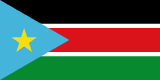

South Sudan
Last Updated: 2026-04-02
Official Portal: Government of South Sudan
Embassy Finder: South Sudan Ministry of Foreign Affairs
Quick Facts
| Category | Details |
|---|---|
| Residency for naturalization | 10 years of continuous lawful residence |
| Language requirement | No formal language test; knowledge of English or a local language expected |
| Civics test | None |
| Processing time | Unpredictable; institutional capacity is severely limited |
| Naturalization fee | Nominal (fee schedule not consistently published) |
| Dual citizenship | Fully permitted under the 2011 Nationality Act and the Transitional Constitution |
| Citizenship by birth | Yes, if at least one parent or grandparent is a South Sudanese citizen or was a member of an indigenous community |
| Citizenship by descent | Automatic for children of South Sudanese citizens |
| Governing law | Nationality Act 2011, Transitional Constitution of the Republic of South Sudan 2011 |
Dual Citizenship
South Sudan fully permits dual citizenship. The Transitional Constitution (Article 45(6)) and the Nationality Act 2011 explicitly allow South Sudanese citizens to hold the nationality of another state simultaneously.
This was a deliberate and strategic policy choice for the world’s newest country. When South Sudan gained independence on 9 July 2011 — following the January 2011 referendum in which 98.83% voted for separation from Sudan — the framers of the new state recognized several realities:
- Massive diaspora: Millions of South Sudanese lived abroad as a result of decades of civil war (1955—1972 and 1983—2005). Communities had formed across the United States, Australia, Canada, the United Kingdom, Kenya, Uganda, Egypt, and Ethiopia.
- Need for expertise: The new state desperately needed the skills, education, and financial resources of its diaspora. Requiring them to choose between their South Sudanese heritage and their acquired citizenships would have severed these critical ties.
- Sudan complication: Many South Sudanese held Sudanese nationality. Allowing dual citizenship prevented them from having to navigate the immediate and complex process of renouncing Sudanese citizenship.
There are no restrictions on dual citizens holding public office under the Transitional Constitution, though this has been debated politically. Several senior government officials hold dual citizenship with the United States, United Kingdom, Australia, or East African countries.
Relationship with Sudan: Upon South Sudan’s independence, persons of South Sudanese origin who held Sudanese nationality faced a complex situation. Sudan’s 2011 Nationality Act amendments stripped Sudanese citizenship from persons who acquired South Sudanese citizenship, effectively forcing a choice from the Sudanese side. South Sudan, by contrast, did not require South Sudanese citizens to renounce Sudanese nationality — creating an asymmetric situation where South Sudan accepted dual citizenship but Sudan did not.
Acquisition of Nationality
By Birth (Jus Sanguinis and Indigenous Community Membership)
South Sudanese citizenship is primarily acquired based on descent and membership in one of the indigenous ethnic communities of South Sudan. Under the Nationality Act 2011 (Section 8), a person is a South Sudanese citizen by birth if:
- Any parent, grandparent, or great-grandparent was born in South Sudan, OR
- The person belongs to one of the indigenous ethnic communities of South Sudan as of 1 January 1956 (the date of Sudan’s independence from Anglo-Egyptian rule), OR
- Any parent, grandparent, or great-grandparent belongs to one of those indigenous communities.
This is an exceptionally expansive definition — one of the broadest in the world — that casts a wide net for a newly independent nation engaged in post-independence nation-building. It is not tied to place of birth. A person born anywhere in the world to parents or grandparents of South Sudanese indigenous origin qualifies.
Indigenous communities: The Nationality Act references indigenous ethnic communities present in South Sudan as of 1 January 1956. Major groups include the Dinka, Nuer, Shilluk, Bari, Azande, Murle, Toposa, Lotuko, and dozens of others. The use of this date as a reference point was designed to include all groups with historical roots in the territory that became South Sudan, while excluding more recent arrivals.
By Descent
Citizenship passes through both parents equally. The Transitional Constitution guarantees gender equality in the transmission of nationality (Article 45(2)). A child born abroad to at least one South Sudanese parent acquires citizenship automatically, regardless of the other parent’s nationality.
The breadth of the descent provisions means that even third-generation descendants of South Sudanese living abroad can claim citizenship, provided they can demonstrate the ancestral connection.
By Adoption
The Nationality Act provides that a child adopted by a South Sudanese citizen may acquire citizenship, subject to the adoption being legally recognized. The details of implementation are sparse given the severely limited institutional framework. In practice, formal adoption proceedings are rare; customary adoption practices within communities are more common but may not produce the documentation needed for citizenship processing.
By Marriage
A foreign national married to a South Sudanese citizen may apply for nationality after maintaining the marriage for at least 2 years and meeting other basic requirements. Marriage alone does not confer automatic citizenship. The applicant must demonstrate good character and intention to reside in or maintain ties with South Sudan.
Cross-border marriages: Given the porous borders and intermingled communities across South Sudan, Sudan, Uganda, Kenya, Ethiopia, and the Democratic Republic of Congo, cross-border marriages are common. The Nationality Act accommodates this reality by providing a relatively short 2-year waiting period. Customary marriages are recognized alongside civil and religious marriages for the purposes of citizenship applications.
By Naturalization
| Requirement | Details |
|---|---|
| Lawful residence | 10 years of continuous residence |
| Good character | No criminal convictions; good moral character |
| Language | Sufficient knowledge of English or any indigenous language of South Sudan |
| Financial means | Ability to support oneself and dependents |
| Renunciation | Not required (dual citizenship fully permitted) |
| Oath of allegiance | Required |
| Approval | By the competent authority (Directorate of Nationality, Passports, and Immigration) |
The President may grant citizenship by naturalization to any person who has rendered distinguished service to South Sudan, waiving the residency and other requirements.
Documentation challenges: South Sudan’s institutional capacity for processing citizenship applications remains severely limited. The country has experienced civil conflict (2013—2018 civil war, followed by fragile peace), displacement of government offices, and chronic underfunding of civil service institutions. Applicants should expect unpredictable timelines and may need to work through the capital Juba directly, as regional offices may have limited capability.
Nationality certificates and passports: South Sudan began issuing e-passports in 2018, replacing the first-generation travel documents issued after independence. The passport’s travel utility is among the weakest globally, with visa-free access to approximately 36 destinations. This is a key reason dual citizenship is constitutionally protected — South Sudanese citizens benefit substantially from holding a second passport with greater travel utility.
Loss and Renunciation
Voluntary renunciation: A South Sudanese citizen may renounce citizenship by written declaration, provided they hold another nationality and will not be rendered stateless.
Involuntary loss: Citizenship by naturalization may be revoked if it was obtained by fraud, misrepresentation, or concealment of material facts. The law also provides for revocation in cases of disloyalty or service in a foreign military engaged in hostilities against South Sudan.
Citizenship by birth based on indigenous community membership cannot be revoked. This is a fundamental right protected by the Transitional Constitution.
Service in foreign armed forces: The law provides for potential revocation if a naturalized citizen serves in a foreign military engaged in hostilities against South Sudan without authorization. Given the regional security dynamics (conflicts in Sudan, the Democratic Republic of Congo, and the Central African Republic), this provision has practical relevance.
Restoration of Nationality
A person who renounced South Sudanese citizenship may apply for restoration. Given the broad definition of citizenship by birth (based on indigenous community membership going back to 1956), most persons of South Sudanese descent have a strong and arguably irrevocable claim to citizenship regardless of any prior renunciation. The practical process for restoration involves application to the Directorate of Nationality, Passports, and Immigration.
Stateless Persons and Foundlings
A child found in South Sudan whose parents are unknown is presumed to be a South Sudanese citizen. The Nationality Act includes safeguards against statelessness, though practical implementation is constrained by the severely limited capacity of civil registration institutions.
The South Sudan-Sudan statelessness crisis: The separation from Sudan created one of the largest statelessness situations in Africa. An estimated 350,000 to 500,000 people found themselves at risk of statelessness — particularly:
- Persons of South Sudanese origin living in Sudan who were stripped of Sudanese nationality but could not prove their South Sudanese citizenship.
- Border populations with mixed heritage.
- Nomadic and pastoralist communities who crossed the border regularly.
- Children born to mixed South Sudanese-Sudanese parents.
UNHCR and other international organizations have been actively working to address these cases through documentation campaigns and legal assistance.
Document Checklist
- Application form (obtained from Directorate of Nationality, Passports, and Immigration)
- Birth certificate (if available; alternative documentation is widely accepted)
- Proof of South Sudanese descent (ancestral documentation, community/chief attestation letter)
- Valid travel document or identity card (if available)
- Police clearance certificate (where obtainable from any functional authority)
- Passport-sized photographs
- Marriage certificate (if applying through marriage)
- Payment of prescribed fees (where a fee schedule exists)
Important note: South Sudan’s civil registration system is nascent and severely underdeveloped. An estimated 35% of births in South Sudan are registered. Many citizens lack birth certificates or formal identity documents of any kind. Community attestation from traditional leaders, chiefs, or county officials is widely accepted as proof of identity and descent. Applicants should expect a process that relies heavily on oral testimony and community verification rather than documentary evidence.
Sources
-
Nationality Act, 2011 — Republic of South Sudan, principal citizenship legislation.
-
Transitional Constitution of the Republic of South Sudan, 2011 — Part Three, Citizenship and Nationality, Article 45. https://www.goss.org/
-
Government of South Sudan — https://www.goss.org/
-
UNHCR — Nationality and statelessness issues in South Sudan and the broader region. https://www.unhcr.org/south-sudan
-
Directorate of Nationality, Passports, and Immigration — Responsible for processing citizenship and travel document applications.
-
International Organization for Migration (IOM) — Active in South Sudan on documentation, registration, and diaspora engagement programs. https://www.iom.int/south-sudan
-
South Sudan Law Society — Legal resources on citizenship and nationality matters.