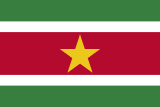

Suriname
Last Updated: 2026-03-29
Official Portal: Ministerie van Justitie en Politie
Embassy Finder: Embassies & Consulates Worldwide
Quick Facts
| Category | Detail |
|---|---|
| Residency for citizenship | 5 years (shorter for Dutch nationals in certain cases) |
| Language requirement | Dutch (official language; literacy test may apply) |
| Cultural knowledge | No formal test |
| Processing time | 12–24 months |
| Application fee | ~$200–$500 USD equivalent |
| Dual citizenship | Conditional — the 2014 Nationaliteitswet restricts but does not universally prohibit dual nationality; rules are complex and situation-dependent |
Dual Citizenship
Suriname’s dual citizenship policy is one of the most nuanced in the Western Hemisphere, shaped by its colonial history with the Netherlands and subsequent revisions to the Nationaliteitswet (Nationality Act).
The Core Rule (2014 Nationaliteitswet)
Under the Surinamese Nationality Act of 2014 (Wet van 28 juli 2014, houdende regels omtrent het Surinaamse nationaliteitsrecht), the general rule is:
- A Surinamese national who voluntarily acquires the nationality of another state automatically loses Surinamese nationality.
- A foreign national who naturalizes as Surinamese is generally required to renounce their prior nationality as a condition of naturalization.
However, there are several important exceptions that make the “conditional” classification appropriate:
Exceptions Where Dual Nationality Is Permitted
-
Persons who acquire Surinamese nationality by birth on Surinamese soil and who subsequently acquire a foreign nationality through marriage, employment of law (automatic acquisition), or are born with dual nationality — these persons may, in certain circumstances, retain both nationalities.
-
Children who acquire dual nationality at birth (e.g., born in a jus soli country to Surinamese parents, or born to parents of different nationalities) are not automatically required to choose at age of majority under current law, though they may be required to elect one nationality in certain administrative contexts.
-
Involuntary acquisition of a foreign nationality (i.e., acquisition that occurs without any voluntary act by the individual, such as automatic nationality conferred by marriage under the law of another country) does not trigger loss of Surinamese nationality.
-
Nationals who acquire Dutch nationality in the Netherlands: This is an area of historical complexity. Given that many Surinamese live in the Netherlands, the interplay between Dutch and Surinamese nationality law is important. The 2014 Act took steps to clarify these rules, but the Netherlands-Suriname dimension remains nuanced.
Practical Reality
In practice, Suriname’s dual citizenship restrictions are not as rigorously enforced as they might be in some other jurisdictions. The large Surinamese diaspora in the Netherlands (approximately 400,000 people — comparable to Suriname’s own population of ~600,000) often holds Dutch citizenship, and the government has generally not systematically pursued revocation of Surinamese nationality in these cases.
Nonetheless, formally and legally, the rules of the 2014 Act apply. Anyone seeking to acquire Surinamese citizenship while retaining another nationality, or to naturalize elsewhere while retaining Surinamese nationality, should obtain specific legal advice from a Surinamese attorney.
Acquisition of Nationality
Surinamese nationality is governed by the Nationaliteitswet 2014 and its implementing regulations, supplemented by earlier frameworks including the Wet Toelating en Uitzetting (1966) and the nationality provisions of the Constitution of the Republic of Suriname (1987, as amended).
By Birth (Jus Soli)
Suriname applies a conditional jus soli rule, not the unrestricted form. A child born on Surinamese territory acquires citizenship at birth if:
- At least one parent is a Surinamese national, or
- At least one parent is lawfully and permanently resident in Suriname and the child would otherwise be stateless.
Children born in Suriname to parents who are present only temporarily (tourists, visa holders, undocumented migrants) do not automatically acquire Surinamese nationality. This is the civil law tradition, influenced by the Dutch legal heritage — a departure from the common law jus soli approach of neighboring Guyana.
By Descent (Jus Sanguinis)
A person born outside Suriname acquires Surinamese nationality by descent if:
- At least one parent is a Surinamese national at the time of birth.
- The birth is registered with a Surinamese consular office or the civil registry within the required period.
Suriname follows a patrilineal and matrilineal approach — both parents can transmit nationality. For children born out of wedlock, the mother’s nationality is automatically transmitted; the father’s nationality requires legal acknowledgment of paternity.
Descent citizenship is generally available for the first generation born abroad. Subsequent generations must take affirmative steps to maintain the link.
By Adoption
A minor child legally adopted by a Surinamese national may acquire Surinamese nationality if the adoption is recognized under Surinamese law. The adoptive parent must submit the adoption order together with a citizenship application to the Ministry of Justice and Police. International adoptions must meet Surinamese private international law requirements for recognition.
By Marriage
Marriage to a Surinamese national does not automatically confer nationality. The spousal naturalization pathway is:
- Minimum 3 years of legal residence in Suriname after marriage to a Surinamese citizen.
- The marriage must be legally recognized in Suriname.
- Standard good character and domicile requirements apply.
- Crucially: the applicant must typically renounce their prior nationality (consistent with the general dual citizenship restriction) unless an exception applies.
By Naturalization (Residency)
Standard Requirements
- 5 years of lawful and continuous residence in Suriname immediately before application.
- Absences of no more than 6 months in aggregate during the 5-year period (stricter than many comparable countries).
- Must be of legal age (18+).
- Must demonstrate Dutch language proficiency (Suriname’s official language is Dutch; an integration or language assessment may be required).
- Must be of good character — police clearance from Suriname and country of origin required.
- Must have stable means of subsistence (income, employment, or assets sufficient to support oneself).
- Must intend to remain resident in Suriname.
- Renunciation of prior nationality is typically required (subject to exceptions noted above).
Reduced Residency Categories
- Dutch nationals: Due to the colonial history and the Treaty of Friendship between Suriname and the Netherlands, Dutch nationals have historically enjoyed somewhat more favorable terms. This area requires verification with current regulations, as the relationship between the two countries has evolved.
- Spouses of Surinamese nationals: 3-year residency (see Marriage section).
- Stateless persons: May have access to an accelerated pathway to prevent ongoing statelessness.
- Persons of Surinamese descent born abroad who can demonstrate strong family ties: May access simplified registration procedures rather than full naturalization.
Preferred Pathways
For Dutch nationals: Suriname’s Dutch colonial heritage creates the strongest natural connection. Dutch nationals seeking Surinamese citizenship are navigating two legal systems that have been historically intertwined. The language barrier (Dutch is official) is absent. However, the dual citizenship restrictions mean Dutch nationals who naturalize as Surinamese may face loss of Dutch citizenship under Dutch law as well — careful planning is required.
For regional investors: With no formal investor visa, the standard 5-year residence track is the primary pathway. Investors who establish businesses and employ Surinamese nationals are well-regarded by immigration authorities.
For neighboring country nationals (Brazil, Guyana, French Guiana): Cross-border communities exist. The residence requirement applies, but geographic proximity facilitates establishing genuine domicile.
For retirees: Suriname does not have a formal retirement visa program comparable to Belize’s QRP. However, persons with stable foreign income can obtain residence permits that accrue toward the 5-year naturalization clock.
Special Clauses & Programs
Dutch Colonial Legacy
Suriname gained independence from the Netherlands on November 25, 1975. At independence, Surinamese citizens who chose to remain in Suriname (rather than move to the Netherlands) became Surinamese nationals. Those already in the Netherlands were offered Dutch nationality under transitional arrangements.
This created a complex body of historical nationality cases, particularly for:
- Persons born in Suriname before 1975 who never formally registered under one nationality or the other.
- Descendants of persons who were in the Netherlands at independence.
- Persons who moved between the two countries repeatedly.
The 2014 Nationaliteitswet attempted to resolve many of these historical ambiguities.
Ethnic Diversity and Nationality
Suriname is one of the world’s most ethnically diverse countries. The Maroon communities (descendants of escaped African slaves who established free communities in the interior forest) and indigenous Amerindian groups have historically had complex relationships with the formal nationality system. Both groups are recognized as Surinamese nationals but maintain distinct cultural and governance traditions.
The Hindustani (descendants of indentured laborers from British India), Javanese (from Dutch-controlled Java), Creoles, Chinese, and smaller European and Lebanese communities all contribute to a remarkable cultural mosaic that has no parallel in South America.
Oil and Mining Economy
Like Guyana, Suriname is experiencing growing interest from international oil companies. TotalEnergies and others are exploring offshore blocks. Gold and bauxite mining are major industries. This resource wealth is creating investment opportunities and associated expatriate communities.
Investment Pathways
Citizenship by Investment (CBI)
Suriname does not operate a formal Citizenship by Investment program. There is no published investment threshold for expedited citizenship.
Residency by Investment (RBI)
No formal RBI program exists. Investment-based residency is handled on a case-by-case basis through the standard work permit and residence permit system, administered by the Vreemdelingendienst (Immigration Service).
The Suriname Investment & Trade Agency (SITA) facilitates investment and can assist with government liaison for large investors.
Business & Entrepreneurship
Company Formation
Suriname uses a civil law corporate framework derived from Dutch law. Primary business structures:
- Naamloze Vennootschap (NV): Equivalent to a public limited company. Standard vehicle for larger businesses and foreign investment.
- Besloten Vennootschap (BV): Equivalent to a private limited company. Standard vehicle for smaller and medium enterprises.
- Commanditaire Vennootschap (CV): Limited partnership.
- Eenmanszaak: Sole proprietorship.
Companies are registered at the Kamer van Koophandel en Fabrieken (Chamber of Commerce and Industry, KKF Suriname).
Entrepreneur & Startup Visas
No dedicated entrepreneur or startup visa exists. Foreign business owners must obtain a vergunning tot verblijf (residence permit) and, if working, a werkvergunning (work permit). These are applied for through the Immigratie en Naturalisatiedienst (IND) — Suriname’s immigration authority.
Tax Overview
| Tax | Rate |
|---|---|
| Corporate income tax | 36% |
| Personal income tax | Progressive, up to 38% |
| Capital gains tax | Not separately taxed (gains included in income tax base for businesses) |
| Turnover tax (OB) | 10% |
| Withholding tax (dividends) | 25% |
| Property transfer tax | 4% |
Suriname’s tax regime is relatively high by regional standards, reflecting its Dutch heritage. There are sector-specific incentives for mining, oil, and certain manufacturing activities under the Investment Act.
Banking & Financial Infrastructure
The Centrale Bank van Suriname (CBvS) is the central bank. Banking infrastructure includes:
- De Surinaamsche Bank (DSB): Largest commercial bank; Dutch-heritage institution.
- Hakrinbank: Second-largest; significant retail presence.
- Republic Bank (Suriname): Trinidad-based Caribbean bank.
- Finabank: Smaller commercial bank.
- Surichange: Foreign exchange institution.
Banking in Suriname uses the Surinamese Dollar (SRD). The currency has experienced significant inflation and exchange rate challenges in recent years following economic crises (2020 currency collapse, IMF program). USD and EUR transactions are common in the business sector.
Opening bank accounts for foreigners requires standard AML documentation. The relationship with Dutch banks provides some integration with SEPA infrastructure.
Key Programs & Incentives
- Investment Decree (SB 2001 No. 25): Provides tax holidays of 8–10 years for qualifying investments; import duty exemptions on equipment; customs duty waivers.
- Free Zones: Suriname has established free trade zone frameworks, primarily around Paramaribo port.
- SITA (Suriname Investment & Trade Agency): Government investment promotion agency; facilitates investment applications.
- Mining sector: Special fiscal regimes under the Mining Act.
- Sustainable agriculture: Incentives for agriculture investments in the interior.
Loss of Nationality
Voluntary Renunciation
A Surinamese national of full age and capacity who has, or will acquire, another nationality may renounce Surinamese nationality by making a formal declaration to the Ministry of Justice and Police or at a Surinamese consular post. Renunciation takes effect upon official registration.
Involuntary Loss
Under the 2014 Nationaliteitswet, Surinamese nationality is involuntarily lost in the following circumstances:
- Voluntary acquisition of foreign nationality: The primary trigger. An adult who voluntarily acquires another nationality (by naturalization, option, or registration) loses Surinamese nationality automatically, unless an exception applies.
- Fraud or misrepresentation: Nationality obtained through fraud may be declared void.
- Service in a foreign armed force against Surinamese interests.
- Persons who have resided outside Suriname for more than 10 years continuously and have failed to maintain the required connection to Suriname (administrative provision, rarely applied in practice).
Recovery / Resumption
Surinamese nationality may be recovered by:
- Making an option declaration (optie) — available to certain categories of persons with Surinamese heritage who lost nationality due to the dual citizenship rules or through historical accidents.
- Applying for renaturalization — available to former nationals who renounced or lost citizenship, subject to standard residence and character requirements.
- Simplified procedures are available for persons who lost Surinamese nationality solely because they acquired Dutch nationality (due to historical integration policies between the two countries).
Practical Guide
Documents Needed
For naturalization:
- Valid passport and any prior passports
- Birth certificate (with apostille or legalization as required)
- Police clearance from Suriname (and country of origin)
- Proof of 5 years lawful residence (residence permit history, Vreemdelingendienst records)
- Proof of address (utility bills, rental contract)
- Proof of income or means of subsistence
- Dutch language proficiency evidence (if applicable)
- Marriage certificate (if applicable)
- Two character references from Surinamese nationals
- Passport photographs
- Completed application form
- Proof of renunciation of prior nationality (or evidence that an exception applies)
Where to Submit
Primary office: Ministerie van Justitie en Politie Immigratie en Naturalisatiedienst (IND) Paramaribo, Suriname
Applications initiated abroad may be submitted at the nearest Surinamese Embassy or Consulate — primarily in the Netherlands (The Hague, Amsterdam), and in other countries with significant Surinamese communities.
Processing Time
- Standard naturalization: 12–24 months
- Complex cases (dual citizenship determination, historical nationality questions): 24–36 months
- Citizenship by descent registration: 6–12 months
The Ministry of Justice and Police has historically had backlogs in nationality cases. Applicants should follow up regularly and ensure all documents are complete at submission.
Fees
- Naturalization application: approximately SRD equivalent of $200–$500 USD (amounts fluctuate with exchange rate)
- Option declaration: smaller administrative fee
- Consular processing: fees apply per consular schedule
Related Countries
- Guyana — western neighbor; shares Amazon jungle border; English-speaking contrast to Suriname’s Dutch
- Brazil — southern border; significant Maroon and indigenous cross-border communities
- France (French Guiana) — eastern border; French Guiana is an EU territory; creates interesting cross-border EU-Suriname dynamics
- Netherlands — former colonial power; large Surinamese diaspora (~400,000+) in the Netherlands; historical nationality ties
- Trinidad and Tobago — Republic Bank presence; CARICOM-adjacent relationship
- Belize — comparable small-nation profile in the region; contrast in language and legal tradition
Sources
- Nationaliteitswet Suriname (2014) — Wet van 28 juli 2014
- Wet Toelating en Uitzetting (WTE) 1966 — historical nationality framework
- Constitution of the Republic of Suriname (1987, as amended 1992)
- Ministerie van Justitie en Politie Suriname — justitie.gov.sr
- Suriname Investment & Trade Agency (SITA) — investinsuriname.com
- Centrale Bank van Suriname — cbvs.sr
- Kamer van Koophandel en Fabrieken Suriname (KKF) — kkf.sr
- Henley Passport Index (2025 edition)
- UN Human Development Report (2024)
- Transparency International Corruption Perceptions Index (2024)
- Global Peace Index (2024) — Institute for Economics and Peace
- World Happiness Report (2025)
- Heritage Foundation Index of Economic Freedom (2025)
- IMF Suriname Country Reports (2022, 2023, 2024)