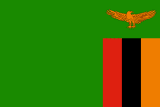

Zambia
Last Updated: 2026-04-02
Official Portal: Zambia Department of Immigration
Embassy Finder: Ministry of Foreign Affairs and International Cooperation
Quick Facts
| Category | Details |
|---|---|
| Residency for naturalization | 10 years of lawful and continuous residence |
| Language requirement | Ability to speak a prescribed language of Zambia (English or a local language) |
| Civics test | None |
| Processing time | 12—24 months |
| Naturalization fee | ZMW 2,000—5,000 (approximately USD 75—190) |
| Dual citizenship | Not permitted — acquiring a foreign nationality results in automatic loss of Zambian citizenship |
| Citizenship by birth | Yes, for children born in Zambia to at least one Zambian parent |
| Citizenship by descent | Automatic for children born to Zambian parents through either parent |
| Governing law | Constitution of Zambia (Amendment) Act 2016, Citizenship Act (Cap 124), Citizenship of Zambia Act 1975 |
Dual Citizenship
Zambia does not permit dual citizenship. The 2016 Amended Constitution is unambiguous on this point, and the prohibition is one of the strictest in Southern Africa.
Article 39 of the 2016 Amended Constitution: “A person shall not be a citizen of Zambia and a citizen of another country at the same time.”
Article 40: “A citizen of Zambia who acquires the citizenship of another country shall, upon the acquisition of that citizenship, cease to be a citizen of Zambia.”
The prohibition operates automatically by force of law. There is no retention mechanism, no exemption for birth citizens, and no ministerial discretion to permit exceptions.
Practical impact on the Zambian diaspora: An estimated 200,000 to 300,000 Zambians live abroad, primarily in:
- United Kingdom (the largest diaspora community, estimated at 30,000—50,000)
- South Africa (significant community in Johannesburg and Cape Town)
- Australia, Canada, and the United States
- Botswana and Namibia (neighboring countries with economic opportunities)
Zambians who have naturalized in these countries have automatically lost their Zambian citizenship. The consequences are severe:
- No land ownership: Zambia restricts land ownership to citizens. Former citizens cannot purchase, inherit, or hold freehold or customary land.
- No voting rights: Former citizens cannot vote in Zambian elections.
- Visa requirements: Former citizens must obtain visas to visit Zambia, though the process is typically straightforward.
- Investment restrictions: Certain business licenses and activities are restricted to citizens or require special permits for non-citizens.
- Succession complications: Inheritance of property in Zambia may be complicated for family members who have lost citizenship.
Reform advocacy: The prohibition on dual citizenship has been a persistent advocacy issue:
- The 2016 constitutional amendment process was seen as the best opportunity for reform, but the final text retained the ban. The Bill of Rights referendum, which would have included dual citizenship provisions, failed to reach the required two-thirds voter threshold.
- The Zambian diaspora organizations (including those in the UK, USA, and South Africa) have continued to lobby for change through petitions, engagement with Members of Parliament, and media campaigns.
- Neighboring countries that permit dual citizenship — including Mozambique, Kenya, Uganda, and Zimbabwe (constitutionally, if not in practice) — are frequently cited as examples.
- As of 2026, no legislation is pending that would change the prohibition.
Selective enforcement concerns: The Zambian government has been criticized for inconsistent enforcement. Some prominent Zambians are widely believed to hold foreign residency or documentation that approaches dual status, while ordinary citizens face strict enforcement. This perception of unequal application of the law fuels public frustration.
Acquisition of Nationality
By Birth (Jus Sanguinis with Territorial Element)
A person born in Zambia acquires citizenship at birth if at least one parent is a Zambian citizen at the time of birth. Birth in Zambia to two non-citizen parents does not confer citizenship — there is no unconditional jus soli.
The Constitution recognizes as citizens by birth all persons who were citizens at the commencement of the 1964 independence Constitution and their descendants. This transitional provision ensures continuity from the colonial era.
By Descent
A child born outside Zambia to at least one parent who is a Zambian citizen acquires citizenship by descent. The 2016 constitutional amendments affirmed gender equality in citizenship transmission — both parents transmit citizenship equally. This was an important reform, as earlier legislation had contained patrilineal biases.
Registration of the birth at a Zambian mission abroad is required for documentary purposes. The Zambian High Commission or Embassy will issue a consular birth certificate.
By Adoption
A child adopted by a Zambian citizen may be registered as a Zambian citizen, subject to the adoption being recognized under Zambian law (typically processed through the Subordinate Court under the Adoption Act). The registration is handled by the Department of Immigration.
The adopted child must not hold another citizenship at the time of registration, consistent with the prohibition on dual citizenship.
By Marriage
Marriage to a Zambian citizen does not automatically confer citizenship. A foreign spouse may apply for citizenship, but must meet the following conditions:
- The marriage must have subsisted for at least 5 years.
- The applicant must have been ordinarily resident in Zambia.
- The applicant must be of good character.
- The applicant must renounce any foreign citizenship before Zambian citizenship is granted.
The application is processed by the Citizenship Board and the Department of Immigration.
By Naturalization
| Requirement | Details |
|---|---|
| Lawful residence | 10 years of continuous residence in Zambia |
| Good character | No criminal convictions; good moral standing attested by local authorities |
| Language | Ability to speak a prescribed language of Zambia (English or one of the 72+ local languages) |
| Financial means | Ability to support oneself and dependents |
| Renunciation of prior citizenship | Required — must renounce all foreign citizenships and provide documentary proof |
| Intent to reside | Must intend to continue residing in Zambia |
| Oath of allegiance | Required upon approval |
| Fee | ZMW 2,000—5,000 |
The Citizenship Board reviews applications and makes recommendations to the Minister of Home Affairs. Naturalization is discretionary — meeting all requirements does not guarantee approval. The process typically takes 12 to 24 months.
Loss and Renunciation
Voluntary renunciation: A Zambian citizen who holds or is about to acquire another nationality may renounce Zambian citizenship by written declaration to the competent authority.
Automatic loss: A Zambian citizen who acquires a foreign nationality by voluntary act ceases to be a Zambian citizen immediately. This is automatic by operation of the Constitution and does not require any formal proceedings, notification, or administrative action. The moment the foreign nationality is conferred, Zambian citizenship is lost.
Deprivation (for registered/naturalized citizens): Citizenship by registration or naturalization may be revoked if:
- Obtained by fraud, false representation, or concealment of a material fact.
- The person has shown disloyalty to Zambia.
- The person has been sentenced to imprisonment for a term of 3 years or more within 7 years of registration or naturalization.
- The person has resided outside Zambia for a continuous period of 7 years without maintaining registration at a Zambian mission.
Citizens by birth cannot be deprived of citizenship — this is a constitutional protection.
Restoration of Nationality
A person who lost Zambian citizenship may apply for restoration, but only if they have first renounced the foreign nationality that caused the loss. This is a strict prerequisite with no exceptions.
Requirements for restoration:
- Documentary proof that the foreign nationality has been surrendered (renunciation certificate from the foreign government, surrender of foreign passport).
- Good character and no disqualifying criminal record.
- Intent to reside in Zambia or maintain a substantial connection.
- Application to the Citizenship Board through the Department of Immigration.
- Processing time: typically 12 to 24 months.
- Restoration is discretionary, not automatic.
Stateless Persons and Foundlings
The Constitution provides that a child found in Zambia who is, or appears to be, under the age of eight years and whose nationality and parents are not known is presumed to be a citizen of Zambia by birth. This is a strong safeguard against childhood statelessness.
Zambia is a party to the African Charter on the Rights and Welfare of the Child and has ratified the 1954 Convention Relating to the Status of Stateless Persons.
Document Checklist
- Completed application form (obtained from Department of Immigration)
- Birth certificate (certified copy, long form)
- Valid passport or travel document (current and expired)
- Proof of parentage for citizenship by birth/descent claims (parents’ birth certificates, NRCs)
- Marriage certificate (if applicable, minimum 5 years)
- Evidence of 10 years continuous residence (for naturalization — permits, lease agreements, utility bills)
- Police clearance certificate (from Zambia and countries of recent residence)
- Proof of renunciation of foreign citizenship (renunciation certificate, passport surrender confirmation)
- Language proficiency evidence (interview or attestation)
- Proof of financial self-sufficiency (bank statements, employment letter, tax returns)
- Passport-sized photographs (4)
- Payment of prescribed fee (ZMW 2,000—5,000)
Sources
-
Constitution of Zambia (Amendment) Act, 2016 — Part IV, Citizenship, Articles 35-42. https://www.parliament.gov.zm/
-
Citizenship Act (Cap 124) — Principal legislation governing citizenship acquisition, loss, and restoration.
-
Department of Immigration — Processes citizenship and immigration applications. https://www.zambiaimmigration.gov.zm/
-
Ministry of Home Affairs and Internal Security — Oversees citizenship policy and the Citizenship Board.
-
Ministry of Foreign Affairs and International Cooperation — Zambian missions abroad for overseas applications and consular services. https://www.mofa.gov.zm/